Wildfire evacuations are won or lost before they begin. The households that leave quickly and safely are the ones that made their decisions while the sky was still blue: where to go, which routes, what to grab, who takes the dog. California's fire agencies have refined this into a framework worth adopting wherever you live — and the whole point of this guide is that every item in it happens before anyone tells you to leave. One rule sits above everything here: official evacuation instructions always take precedence over anything an app or a website tells you, including ours.
Ready, Set, Go! — the framework
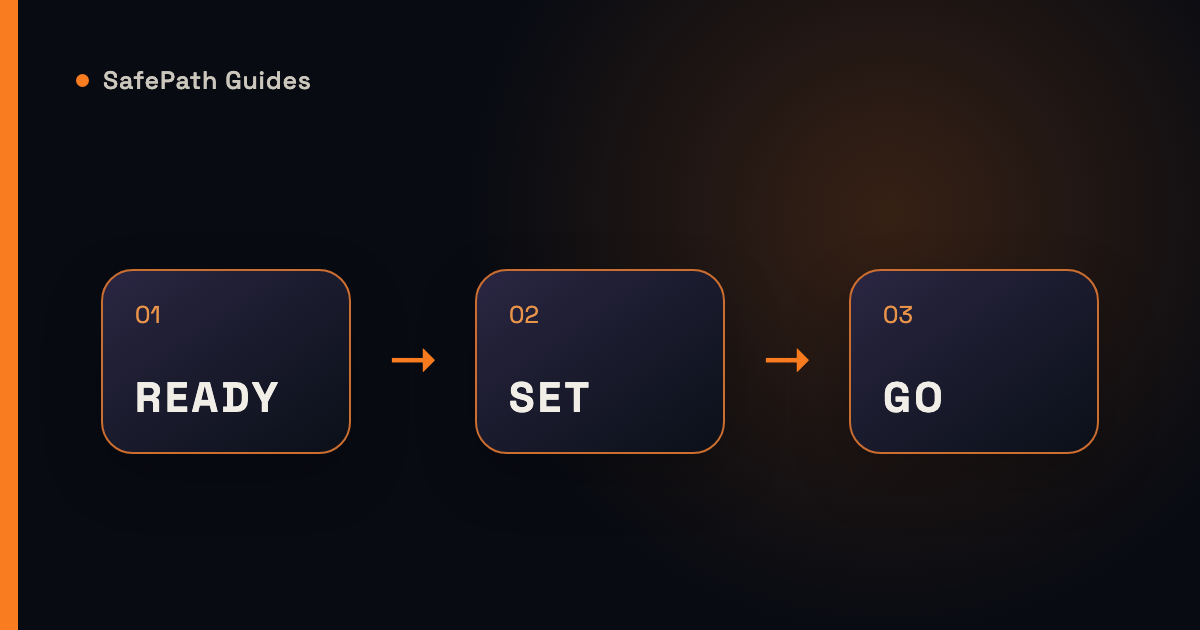
CAL FIRE's Ready, Set, Go! program splits wildfire preparation into three moves. Ready: harden your home and maintain defensible space. Set: build your Wildfire Action Plan, practice evacuation with your family, and stage your go-bags. Go: when fire threatens, leave — early and without ceremony. The structure matters because it converts a panic into a sequence.
Know the difference between a warning and an order
California's official definitions are worth memorizing. An Evacuation Warning means danger is impending: assume an order will follow, gather your things, and if you need extra time — mobility needs, kids to collect, large animals — leave now. An Evacuation Order means immediate threat to life: leave right now and follow law enforcement directions. The warning is your head start; households that use it never have to test how fast they can move.
Leave early — this is the whole game
CAL FIRE's evacuation guidance says it plainly: leave as soon as fire officials suggest evacuating, without waiting for a mandatory order. Early departure keeps you out of danger and keeps roads clear for fire equipment — and in a fast-moving fire there may be no time for door-to-door warnings at all. If you are the type to wait for certainty, decide now, in advance, that the warning is your certainty.
Routes, fuel, and the car question
Ready.gov's evacuation guidance recommends planning several destinations in different directions and knowing alternate routes to each — fires do not respect your favorite road. Keep the vehicle at least half full at all times and full when evacuation looks plausible: gas stations close in emergencies and cannot pump during power outages. If your car is electric, the same logic applies to the battery.
The go-bag, staged where you can grab it
Everything in our go-bag checklist applies, with wildfire emphasis: N95 masks for smoke, documents ready, medications topped up. Stage the bags by the door you would actually leave through, not in the attic. If our Emergency Preparedness Checklist for Families is the annual audit, the wildfire go-bag is the sprint kit.
Pets evacuate too
Ready.gov is blunt: if you evacuate, your pets evacuate. Animals left behind may end up lost, injured, or worse. Because many shelters and hotels do not allow pets, identify pet-friendly destinations in advance and set up a buddy system with neighbors in case a fire starts while you are away. Carriers by the go-bags, leashes on hooks, photos of you with each animal in the documents pouch.
Alerts: sign up while it's boring
Ready.gov recommends multiple alert channels: sign up for your county's community alert system, keep Wireless Emergency Alerts enabled (they need no signup), and consider the FEMA app for National Weather Service alerts. Add the NWS Red Flag Warning to your vocabulary — it is the fire-weather service's signal that conditions are primed for extreme fire behavior: strong winds, low humidity, heat after a dry spell. A Red Flag day is a good day to have the tank full and the bags staged.
Prepare the children before the smoke
Kids handle evacuations the way they were prepared for them. Walk the plan together: where the family meets, who picks them up from school, what goes in their own small bag. Rehearse it like a fire drill, not a horror story — the message is 'we know what to do,' not 'be afraid.'
Where SafePathApp fits
Situational awareness is the hardest part of a fire day: what is burning, how close, which way. That is the problem SafePathApp was built around — a live map of nearby wildfires and hazards, air quality as smoke moves, proximity alerts when something enters the radius you care about, and your family plan and go-bag checklists in the same place. It is a companion to official alerts and orders, never a substitute; when officials say go, go.
Sources
Continue Reading
Emergency Planning With Kids and Pets: A Family Preparedness Guide
Plans fail at the soft parts — the kid at school, the cat under the bed, the phone number nobody memorized. How to plan for the family you actually have.
SafePathAppHow Much Emergency Water Should a Family Store?
One gallon per person per day is the start, not the answer — how much your family actually needs, safe storage, and the six-month rule.
SafePathAppUnderstanding AQI and Wildfire Smoke: When Should You Stay Indoors?
The colors on the air quality map, decoded — what PM2.5 does, who needs to be careful sooner, and the official playbook for smoke days.
SafePathApp